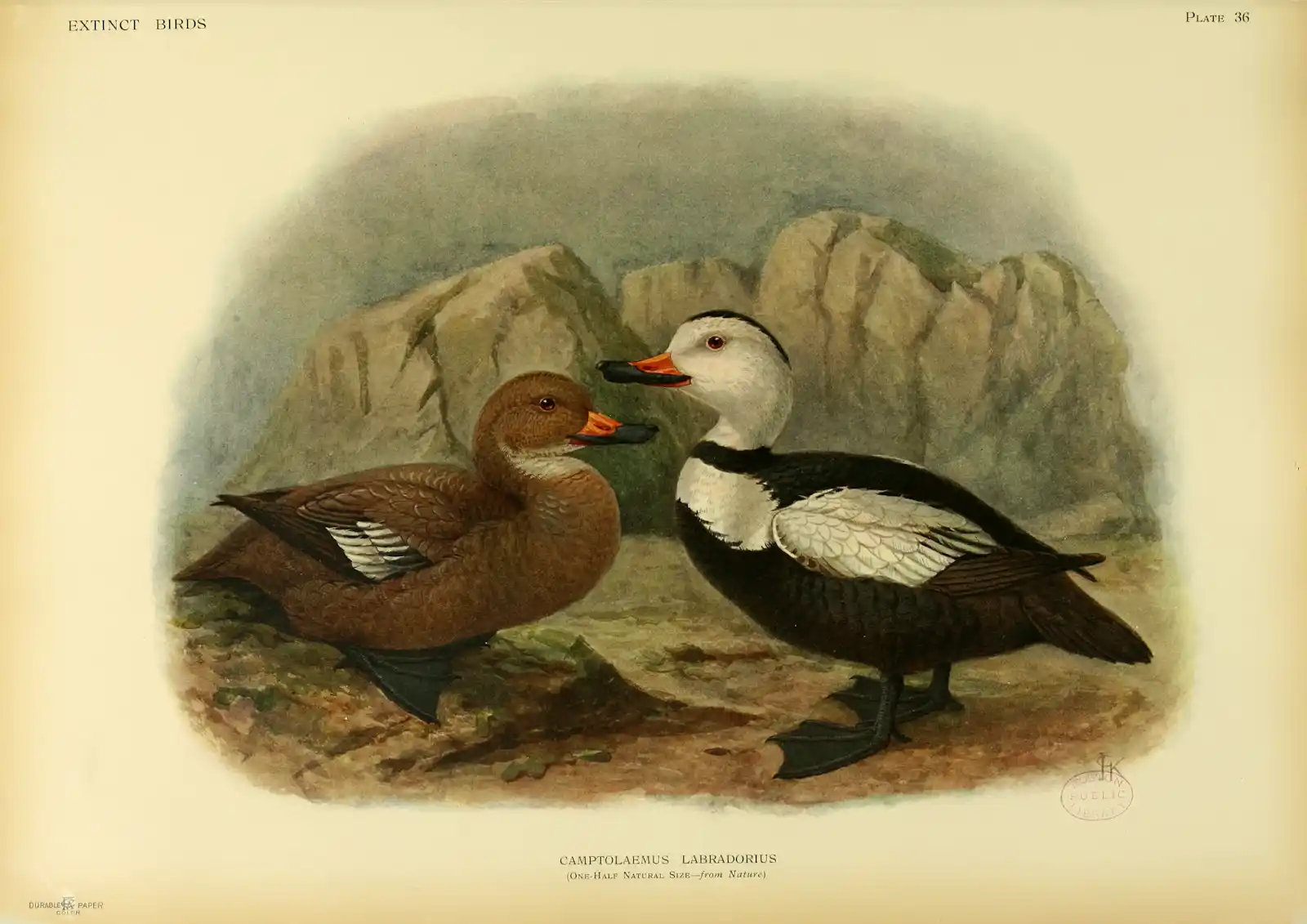
Meet the Extinct Labrador Duck
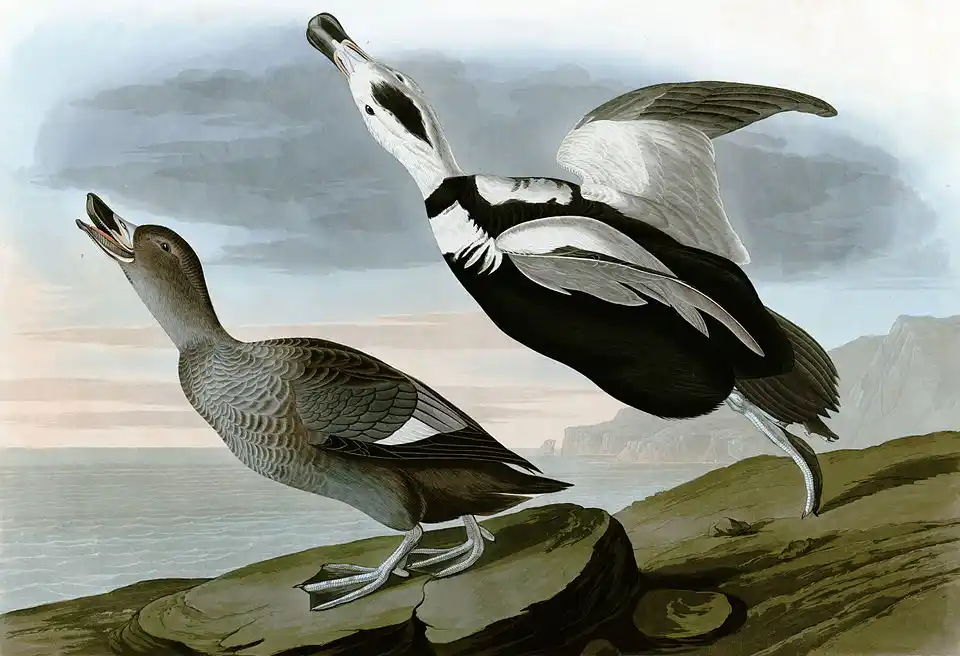
Painting of two Labrador ducks by John James Audubon.
The Labrador duck (Camptorhynchus labradorius) was a North American sea duck that once occurred along the northern Atlantic coast of New England and Canada’s Maritime Provinces. It is the only Northern Hemisphere waterfowl species known to have gone extinct in modern times. The last known specimen was taken in the fall of 1875. Its disappearance serves as a reminder of the fragility of wildlife populations and the gaps that can remain in our understanding of species once they are gone.
Learning More About the Labrador Duck
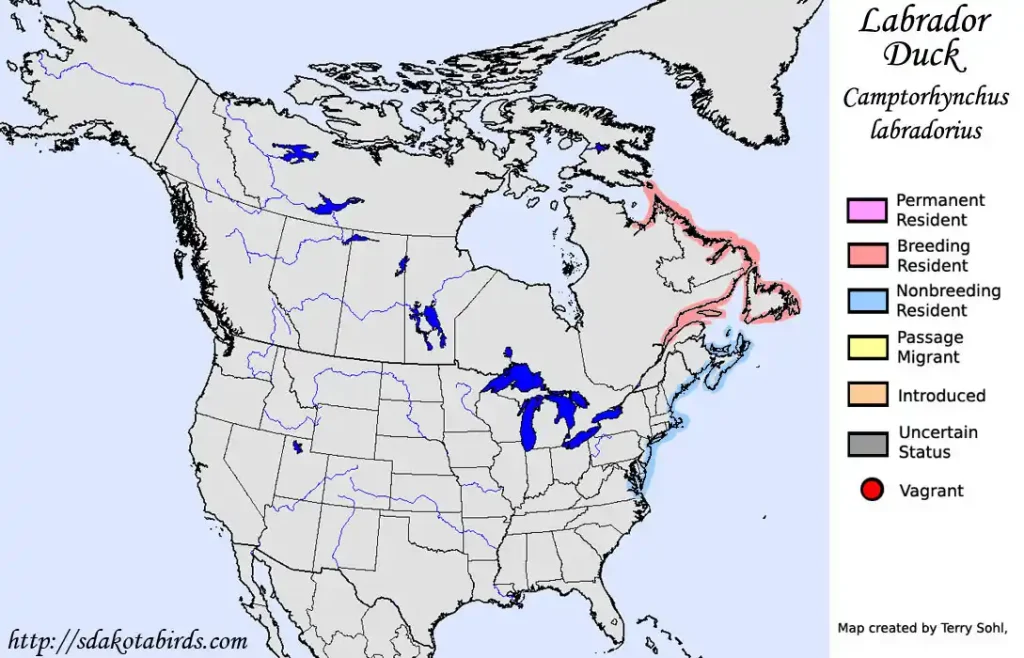
Map of the range of the extinct Labrador duck. Credit: South Dakota Birds.
Range: Historically, the Labrador duck was recorded from Labrador south to the Chesapeake Bay, and likely mainly wintered along Long Island in New York. Canadian winter records include Grand Manan Island in New Brunswick and the Bay of Fundy. Most museum specimens were obtained around Long Island. The species’ breeding range remains uncertain. Labrador ducks may have nested on islands in the Gulf of St. Lawrence, on the coasts of Labrador, and possibly also on the Ungava Peninsula, though no definite breeding records were ever obtained.
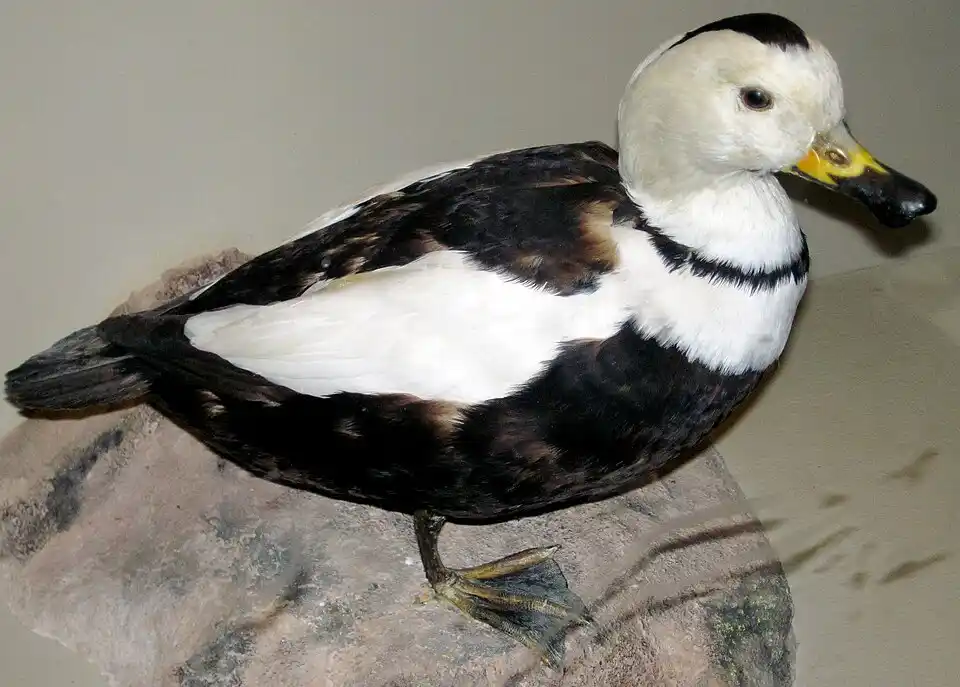
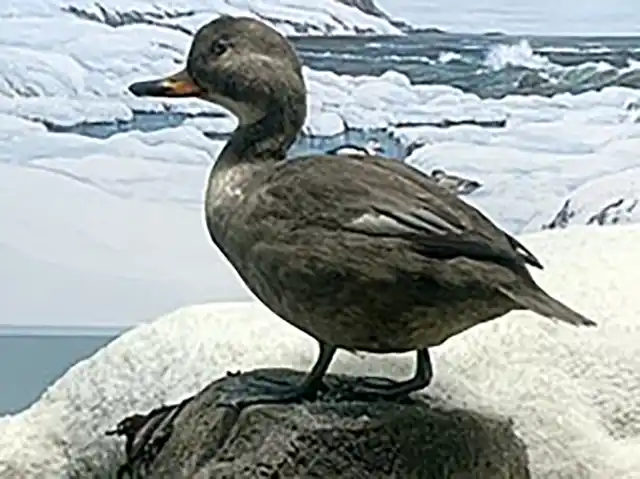
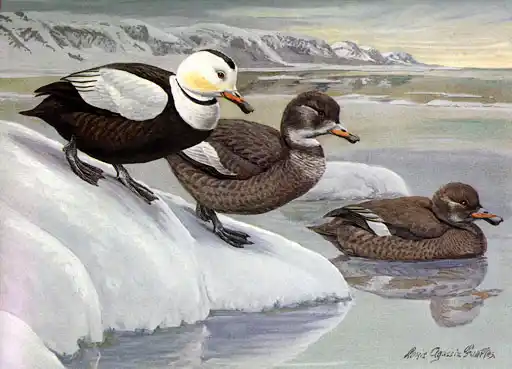
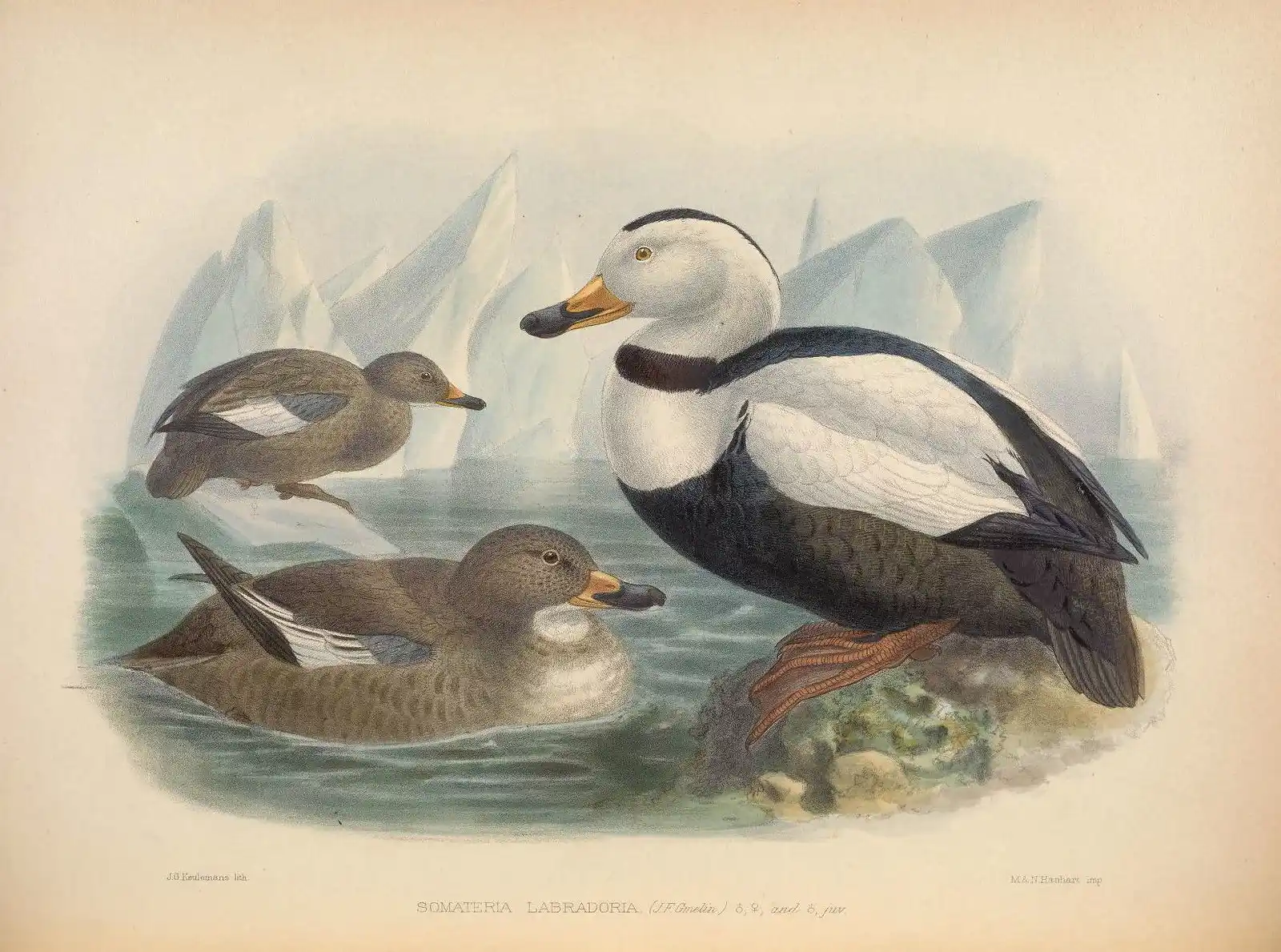
Description: Adult males had an entirely white head, neck, and scapular region, except for a black stripe extending from the crown to the nape and a black collar at the base of the neck. The cheeks had a yellowish area of stiffened feathers. Much of the rest of the body—including the tail, rump, back, primaries, and underparts—was black, while the wings were mostly white with black primaries. Females were generally uniformly brownish gray, with bluish slate tones on the back and lighter grayish brown underparts. Both sexes had a white speculum formed by the greater secondary coverts and secondaries. Juveniles apparently resembled adult females for most of their first year, with young males beginning to show white feathers on the head, throat, and breast by the end of their first winter.
Diet: The Labrador duck appears to have had a specialized diet, as suggested by the unusual structure of its bill. The species may have fed both by dabbling at the surface and by diving. Birds were sometimes caught by fishermen on trotlines baited with blue mussels (Mytilus), suggesting that mollusks may have been part of their diet. They were often observed feeding close to shore along sandy bays or in estuaries where mussels could be abundant.
Reproduction: Very little is known about the Labrador duck’s breeding behavior or reproduction. Nothing specific was recorded about its social behavior, and its nesting biology remains unknown.
Extinction: The Labrador duck vanished rapidly in the mid-1870s, leaving many aspects of its biology unknown. The reasons for its extinction remain uncertain. The species was not an important sport species and was not sought after by market hunters. One possible explanation is disturbance to its breeding grounds, such as the arrival of mammalian predators like foxes in previously isolated nesting areas. Today, fewer than 60 skins, mounts, and bones of Labrador ducks remain in museums around the world.
Labrador Duck Photo Gallery